
Industry · Retail & warehousing
Compliance for retail and warehousing
A retail chain is many small establishments, each under its own state's rules. A warehouse can be a commercial establishment or a factory, depending on what happens inside. We keep both registered, licensed and staffed within the law.
- Shops & Establishments for every store
- Warehouse licences and consents
- Contract and seasonal staff
- Renewals tracked by state
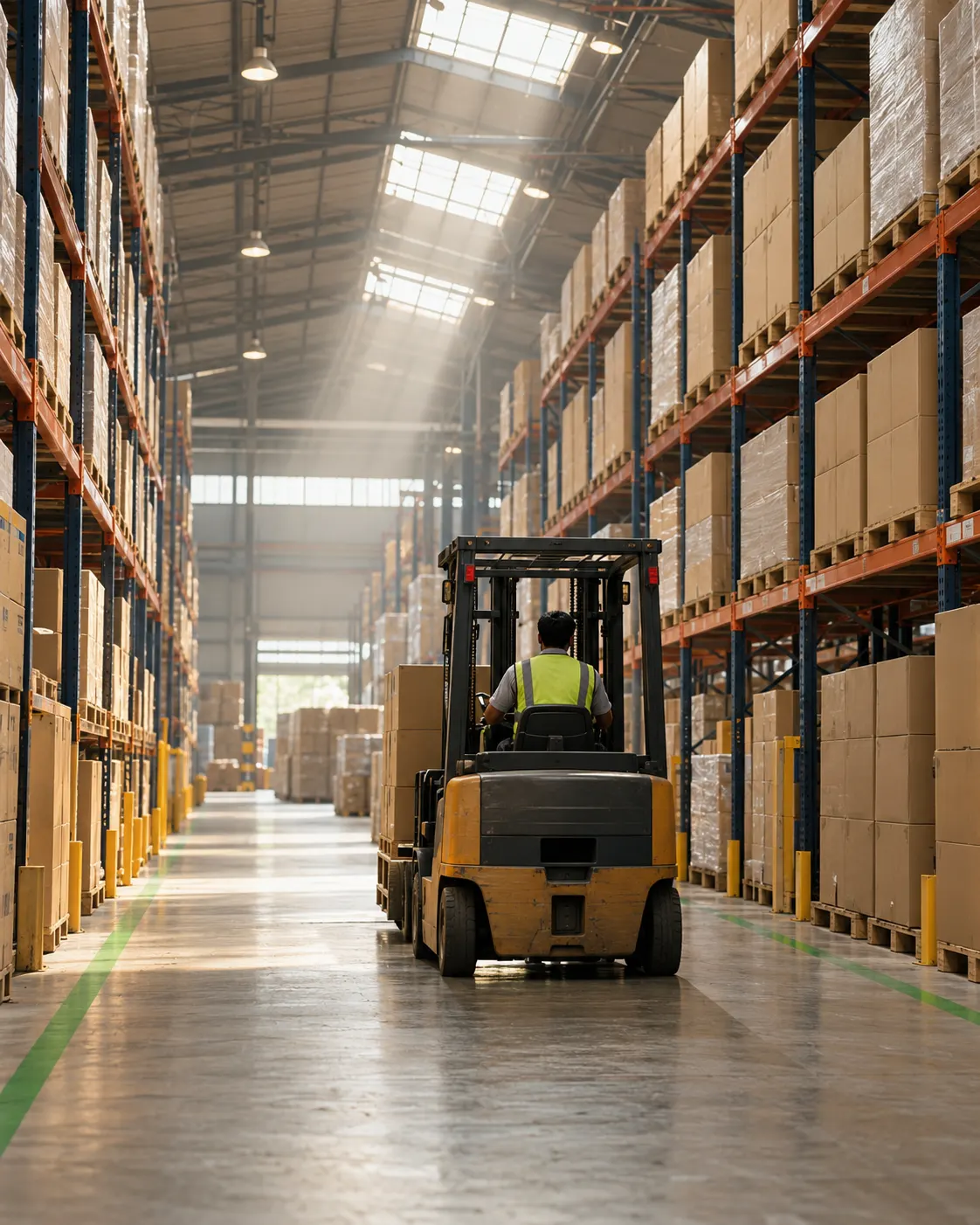
Two kinds of site
The store and the warehouse, side by side
Retail and warehousing share a payroll but not a rulebook. A store is a commercial establishment. A warehouse can be one too, or it can be a factory, and then the licences change.
The store
A commercial establishment under the state's Shops and Establishments Act.
- 01Registration or intimation, by the state's threshold and the store's headcount
- 02The certificate displayed at the store
- 03Working hours and holidays under the state's Act
- 04Registers and returns kept current
- 05Legal metrology registration for weighing instruments and packaged goods
- 06Trade licence renewed in the municipal window
Shared by both
- PF and ESI by the 15th
- Professional Tax and LWF by state
- Minimum wages, as each state revises them
- Contractors' wages, PF and ESI checked
- Seasonal staff on written terms
The warehouse
An establishment, or a factory if a manufacturing process runs inside.
- 01A factory licence where packing or cold storage runs with power and 10 or more workers
- 02Pollution Control Board consents and DG set approval
- 03Fire NOC, and a lift licence where there are lifts
- 04FSSAI licence for food stocks, where it applies
- 05Legal metrology registration
- 06Loading and unloading contractors checked
What applies
The obligations behind a store network
Many small sites in many states means the same obligation, repeated with different rules. Each one below names the law it comes from and the service that handles it.
- 01
Shops & Establishments for each store
State Shops and Establishments ActRegistration or an intimation, depending on the state's thresholds and the store's headcount, often within about 30 days of opening. Validity runs from a year to a lifetime registration for very small establishments, by state.
Licences & registrations - 02
Registration under the OSH Code
OSH Code, 2020A new establishment with 10 or more workers applies electronically for OSH Code registration within 60 days. An existing registration carries over once its details are filed in the prescribed time.
Labour Codes advisory - 03
Factory licence for some warehouses
OSH Code, 2020Packing goods for sale or transport, and storing them in cold storage, are manufacturing processes under the Code. A warehouse doing either with the aid of power and 10 or more workers is a factory.
Factory compliance - 04
Warehouse consents and NOCs
Air, Water and EP Acts; fire and lift rulesPollution Control Board consents, DG set approval, a Fire NOC and a lift licence, depending on the site and what it stores.
EHS compliance - 05
Legal metrology
Legal metrology lawRegistration for businesses that deal in packaged commodities or use weighing and measuring instruments.
Licences & registrations - 06
Contract labour at the warehouse
OSH Code (formerly CLRA)Loading and unloading is not a core activity where the establishment is not set up for it. The contract labour provisions apply from 20 workers, and wages, EPF and ESIC fall back on you if a contractor defaults.
Contractor & vendor compliance - 07
PF, ESI, PT and LWF
Code on Social Security, 2020 and state lawsContributions by the 15th of the following month, and Professional Tax and Labour Welfare Fund on the calendar of each state where you have a store.
PF & ESI compliance - 08
Minimum wages
Code on Wages, 2019Every employee has a statutory right to minimum wages, and states revise them during the year. Gujarat, for one, revised its special allowance from 1 October 2026.
Payroll services
Services that apply
The services for stores and warehouses
Each card opens the service page with the full scope and the questions employers ask.

Licences & registrations
Shops & Establishments for every store, trade licences and legal metrology.

Labour law compliance
Registers, returns and notices for each store, and inspection support.

Factory compliance
Factory licences and registers for warehouses that count as factories.

EHS compliance
Pollution Control Board consents, Fire NOC and lift licences for each warehouse.
Contractor & vendor compliance
Loading contractors and 3PL providers checked for wages, PF and ESI.
Contract staffing
Seasonal associates for peak periods, with PF, ESIC, TDS and PT handled.
Common risks
Where retail and warehousing usually slip
Most of these come from growth: a new store, a new warehouse or a busy season.
Risk 01
A new store, never registered
Many states expect registration, or an intimation, within about 30 days of starting business. Missing it can bring fines and trouble with bank accounts and other licences.
We check the state's thresholds, then register the store or file its intimation.
Licences & registrationsRisk 02
A warehouse treated as a shop
If packing or cold storage runs with power and 10 or more workers, the warehouse is a factory, with a factory licence, registers and returns of its own.
We obtain and renew factory licences, and keep the registers and returns that come with them.
Factory complianceRisk 03
Loading contractors unchecked
If a contractor pays late or short, you pay the workers the balance. You remain liable for EPF and ESIC if the contractor defaults.
EPF and ESI compliance is checked for each contractor, challan by challan.
Contractor & vendor complianceRisk 04
Seasonal staff on a side sheet
Temporary staff paid from a separate sheet often have no TDS worked out and no clear record of who was working.
We engage seasonal associates under contract staffing, with PF, ESIC, TDS and PT remitted on time.
Contract staffingRisk 05
A minimum wage revision missed
States revise minimum wages and allowances during the year. Paying last year's rate is a gap across every store in that state.
Minimum wages are checked for your own staff and for each contractor's.
Payroll servicesRisk 06
A renewal date missed
Shop registrations, trade licences and Fire NOCs renew on different cycles in different states. A missed trade licence window invites notices and penalties.
We track every renewal date, store by store, and file before expiry.
Licences & registrations

Store by store
Many sites, one relationship manager
Every client has a dedicated relationship manager, who keeps the registrations, renewals and contractor checks for every store and warehouse in view.
- Establishments and factories covered
- 250+
- Challans and returns filed every month
- 300+
- Employees under our compliance management
- 3,500+
- Client retention
- 85%
We work from our head office in Rajajinagar, Bengaluru, for employers across India, and reply within two working hours.
FAQ
Questions about retail and warehouse compliance
Can't find your answer? Ask us on WhatsApp and we'll reply within 2 working hours.
Does every store need its own Shops and Establishments registration?Needs client review
Each store is assessed against the law of its state. Depending on the state's thresholds and the store's headcount, it registers or files an intimation, and displays the certificate at the premises. A registration confirms the store's business address, so a new store needs its own.Needs client review
When is a warehouse a factory?
When 10 or more workers work there and a manufacturing process is carried on with the aid of power, or 20 or more without it. Packing goods for sale or transport, and storing them in cold storage, are manufacturing processes under the OSH Code. If a state's earlier law set a different number, that number continues until it is amended.
Which licences does a warehouse need?
It depends on the site. Typical requirements are Pollution Control Board consents, environmental clearance where required, a Fire NOC, DG set approval, legal metrology registration, and an FSSAI licence for food stocks. Waste authorisations and a lift licence apply where relevant, and a factory licence where the warehouse counts as a factory.
Can we use contract labour for loading and unloading?
Generally, yes. The OSH Code prohibits contract labour only in core activities, with exceptions. It does not treat loading and unloading as core where the establishment is not set up for it. The contract labour provisions apply from 20 workers, and a 3PL provider's compliance is checked the same way as any contractor's.
How long is a Shop Act registration valid?
It depends on the state. Some issue registration for a year or more and expect renewal, while others give longer validity, or a lifetime registration for very small establishments. In Maharashtra, a Gumasta licence can be taken for up to 10 years, depending on state rules and the fee paid.
Can you staff our stores for the festive season?
Yes, through our contract staffing service. We engage associates for seasonal and fixed-term roles on tested employment and deputation contracts. We register them under PF and ESIC, remit PF, ESIC, TDS and Professional Tax, and close each engagement when the assignment ends.
What does it cost?
It depends on the number of stores and warehouses, the states they are in and your headcount. Send us an enquiry with those details and we will come back with a quote.


Enquiry
Talk to a compliance expert
Share your states and headcount, and we will get back to you within 2 working hours.
- Call+91 98457 40938
- WhatsApp+91 98457 40938
- Emailinfo@nkonehrsolutions.com
- Head office, Bengaluru1163, 9th Main, 11th A Cross, Nagapura, Mahalakshmipuram, near Rajajinagar Metro Station, Rajajinagar 1st Block, Bengaluru, Karnataka 560086
